Whose Side?


This past Sunday, we held our annual meeting with our partners in Uganda, Friends of Sabina. Although I couldn’t stay throughout the entire meeting, I was deeply touched by the children and staff of the school for the enormous progress that they have made. Sincere thanks to Patricia and the team for working very hard on it. It was a labor of love, and, as you know, it comes with no great benefits or remuneration.
For many of our parishioners who are sponsoring children at the Friends of Sabina School, much as their joy was about seeing their ‘children,’ even from a distance, we have come to find out that distance is of little consequence when love is the motivating drive. By choosing to be a part of the story of these children, these parents have demonstrated whose side they choose to be on.
Watching the children reminded me of my first interaction with missionaries from Gideon International, who visited my primary school many, many years ago and donated New Testament pocket bibles. That Bible was a gift I held on to for a long time. I don’t remember the names of those missionaries, but I remember the gift they gave to me. One of the Bible verses I heard that morning, and which has stayed with me all through the years, is:
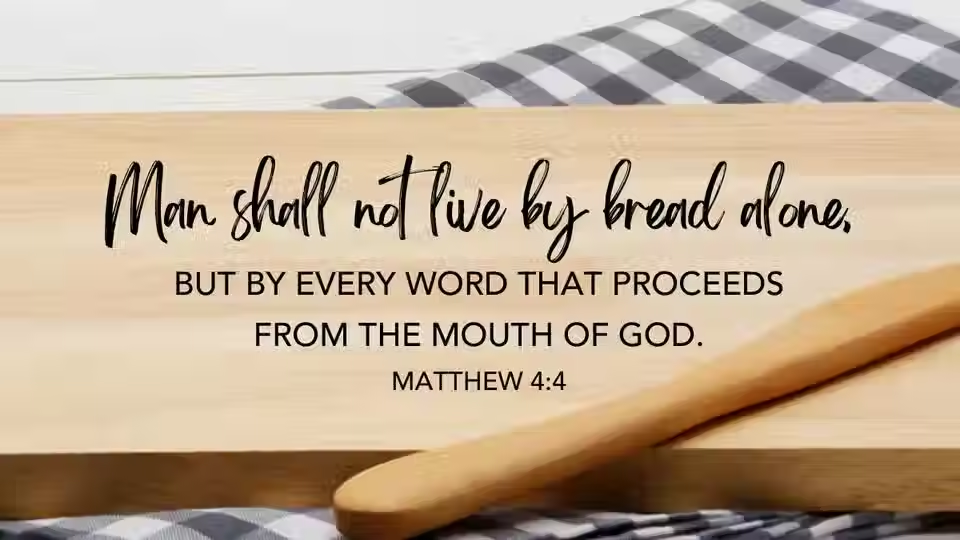
Those missionaries did not give us any material gifts. They didn’t fix our school. They didn’t provide us with laptops. They didn’t pay for our librarian. All they did was share blue New Testament Psalms and Proverbs pocket Bibles, which contained the very Word that transforms human beings and daily invites us to our higher selves. Their gift demonstrated whose side they were on.
More often than not, we are drawn into a debate about whether God is on our side. When we overcome any adversity, we are tempted to believe that God is on our side. When we ‘win’, we conclude that God is on our side. We sometimes even draw God into the mundane, like sports.
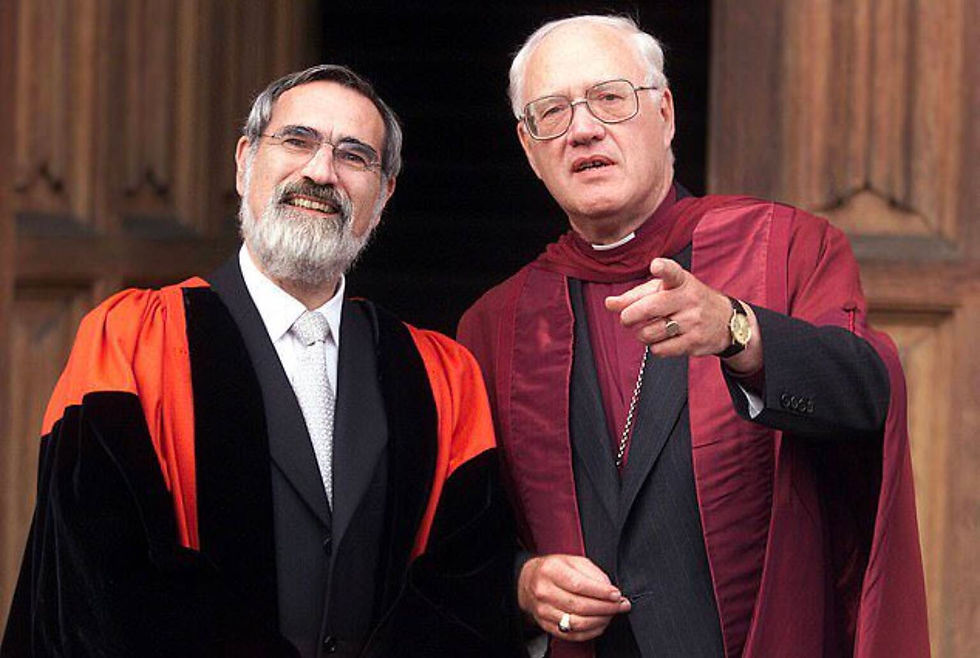
There’s a well-known story of Rabbi Jonathan Sacks and Most Reverend George Carey, Archbishop of Canterbury, who attended a soccer game between Arsenal and Manchester United at Arsenal’s football stadium. Both the Rabbi and the Archbishop support Arsenal. Before the game, both men walked onto the middle of the pitch to thunderous applause. It was as if Arsenal would win the game that day. The game ended, however, with Manchester United soundly defeating Arsenal.
But the interesting thing that happened after the game was a newspaper headline that said the presence of the two men and Arsenal's loss proved there is no God. The Rabbi would later respond that it may also prove that God supports Manchester United. He then went further in his response, making the point that God isn’t interested in either team; rather, God is interested in the game itself.
If God is interested in the game, it doesn’t matter who wins. What
matters is that the game offers a moment when God’s creation can come together to enjoy a particular sport, or any sport that brings the human family together and provides them with a sense of fulfillment in one another. A game offers an opportunity where human beings can find joy, pure joy, with each other. That is what God is interested in.
A few days ago, one of the many local organizations we support, Grassroots, which provides critical services, had to lay off 62 workers due to cuts in federal funding. Grassroots offers essential services for people who are battling the demons of mental health, addiction, and homelessness, among others. Any resident of Howard County who has visited Grassroots, or any parishioner who has joined our Outreach Team in supporting Grassroots patrons, is very much aware of the services offered to people in deep distress.
Recognizing the devastating nature of the decision to terminate the employment of more than sixty staff members and the damaging effect on both the staff and those they serve, the County stepped in to ensure these staff members keep their jobs so they can continue to offer help to the people who need it most.
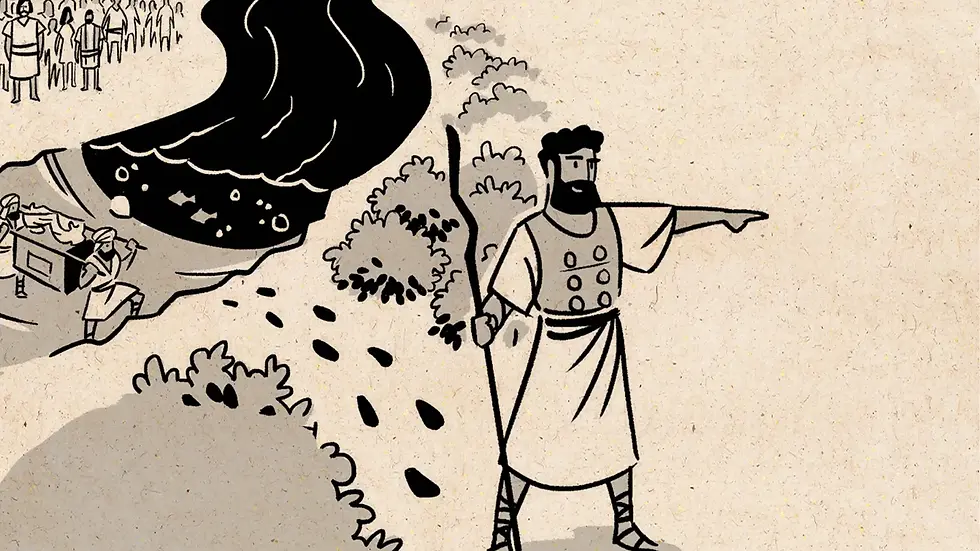
There is a story of Joshua, who stood among the people of Israel by the Jordan and presented them with a choice: choose whom you will serve this day. In other words, whose side do you want to be on? Do you want to be on the side of the God of Israel who delivered you from slavery, or on the side of the gods beyond the Jordan River?
I do not want to minimize the difficulty involved in choosing which side we want to be on. But the fact is, we are often blinded by our allegiances, and so when we have to choose a side, the temptation is always to choose the side that aligns with the allegiances that we carry with us. In other words, we pay homage to our allegiances rather than to the side that best reflects the human face of God.
Don’t ask whether God is on your side or on another person’s side. Like Rabbi Sacks, ask whether God is interested in the game, in a particular act, or in our condition or situation. It's best to ask whether God is interested in us carrying the Divine face with us.
If there’s an example of any value that I appreciate its sustaining endurance, it is one of knowing that God in fact takes sides, but God only takes the side of fairness, justice, love, compassion, dignity, honor, grace, mercy, and so much more.
I am reminded of Paul’s words to the Church in Phillipi:
“Finally, brothers and sisters, whatever is true, whatever is noble, whatever is right, whatever is pure, whatever is lovely, whatever is admirable—if anything is excellent or praiseworthy—think about such things.”
I don’t only think about them; they are the side that I choose to be on.
Whose side are you on?
Blessed Summer,
Manny+