Jollof Rice

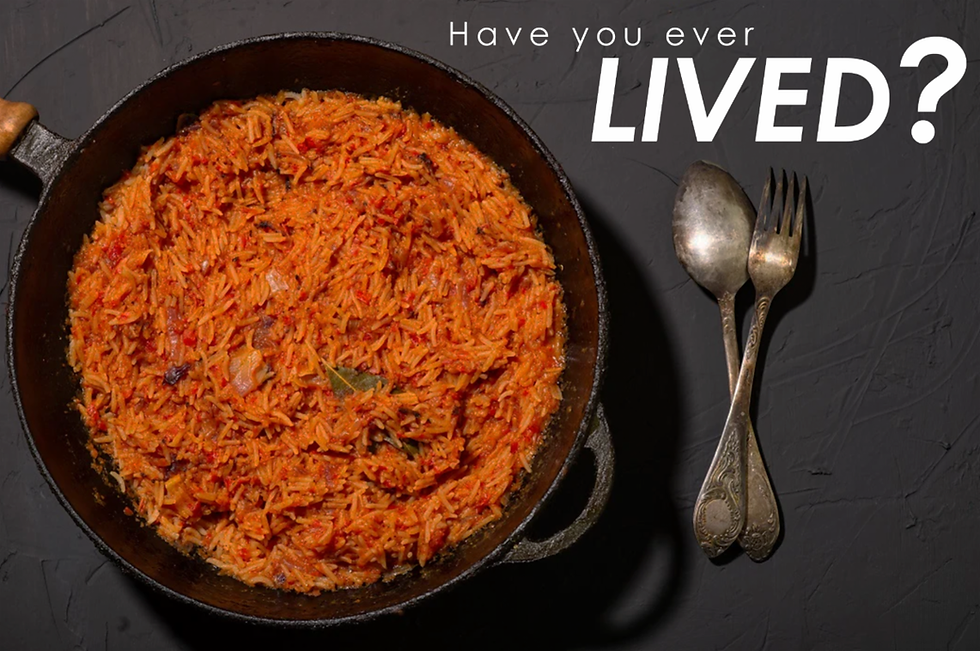
Jollof Rice is a West African delicacy. It is believed to have first started in the Senegambia region of West Africa. Due to migration and travel, it has spread throughout the entire region and further afield. This delicacy has generated significant interest among people who are not from that region.
It has generated some heated competition among people from the Senegambia region, Liberia, Sierra Leone, Ghana, and Nigeria. People from these different countries believe that they cook the best Jollof Rice.
A few years ago, we hosted a Jollof Rice competition here at Christ Church. Although our brothers and sisters from Nigeria won the competition, largely because of their numbers, it was a great showcase of communal spirit and a commitment to the openness that has come to define our Christ Church community.
The truth of the matter is that different West African groups cook their Jollof Rice in different ways. Come to think of it, Jollof Rice is simply rice cooked in tomato sauce. But there is a distinct difference in the preparation of the tomato sauce, so it is safe to say that different groups add their own cultural identity or values to the sauce.
This means that if Jollof Rice tastes different in Ghana, Nigeria, Liberia, or Sierra Leone, it is because they added their own unique cultural value to it. Ghanaians, Nigerians, Liberians, and Sierra Leoneans do not cook it in just the same way that they learned it from their brothers and sisters who first started cooking it.
The point here is the human quest to add value - adding value to ourselves, and to whatever gift that we have received.
Whatever it is that has been given to us - our lives, most especially - we work as hard as we can to add value to that. We do so because we instinctively know that whatever we have been given cannot remain the same. And so bit by bit, we make every effort, as difficult as it may be, to add value.
Jesus tells a great story in the gospels about a master who gave his three servants some talents. To one he gave five, another two, and another one. He gave to each based on their ability. After a rather long trip, the master returned and invited the three servants to offer an account. The one who got five talents gained five more - he added value. The second servant who got two talents, gained two more - he added value. The last one who got a talent said he dug a hole and put the talent in it. He then gave the same talent to his master; thus, he added no value.
The question for our consideration is: Have you ever lived?
The Dalai Lama is reported to have said that to be born is a miracle. The fact that you are here is a miracle. The fact that you can exist to even think about Jollof Rice is a miracle. The fact that you can live and breathe is a miracle. The fact that you can get some education is a miracle. The fact that you have a job or don’t have a job is a miracle. The fact that you are retired is a miracle. The point is that your very presence is a miracle.
It is important, then, to understand that your life is unique. No one has ever lived your life, and no one will ever live it. That is pretty special, if you ask me.
But then again, the question is: Have you ever lived?
Someone once asked, ‘Now that you have this life, what are you going to do with it?’ There’s a lot that you can do with it, but the most important thing is adding value to it.
In just the same way that we have different flavors of Jollof Rice, simply because different people from different regions of West Africa cook it differently, you also must appreciate the fact that the value that you can add to your life could be essentially different, but it should be one that tastes delicious.
At the moment, we are dealing with a community of people who are not only spiritually impoverished but also do not even know that they are impoverished. We have a community of people who want to believe that material satisfaction is equal to spiritual satisfaction, or it is the ultimate satisfaction of life. We have a community of people who prefer not to work on their weaknesses because they believe they have none.
Each of us has a weakness, and that weakness lies in the choices we must make daily. Those choices we make choose us, and we are either going to be blessed by those choices or beaten up by them.
Whatever the choices that we make, the question remains: Have you ever lived? To live is to add value.
This is what Rumi said:
“Don’t be satisfied with stories, how things have gone with others. Unfold your own myth. Be like a tree and let the dead leaves drop. Try not to resist the changes that come your way. Trust that every ending is quietly guiding you to a beginning.”
Our ultimate desire must be to live - to live more fully by adding value to our lives, bearing in mind that it is only God who, through Christ, makes the full life abundantly possible.
We live with full knowledge that, at the barest minimum, we added value to our Jollof Rice, which is why it is delicious.
Happy Eastertide!
Manny+